Essential Monthly Planner Log Book Interior for Your Amazon KDP Publishing Workflow
For creators looking to publish on Amazon Kindle Direct Publishing (KDP), the interior file of a planner is the core product. A well-designed Monthly Planner Log Book KDP Interior is more than just a digital file; it is the functional blueprint of a physical book that customers will use daily. Its design and specifications directly impact usability, customer satisfaction, and ultimately, sales. Understanding how this interior integrates into your publishing process is crucial for efficiency and quality.
Understanding the Role of the KDP Interior File
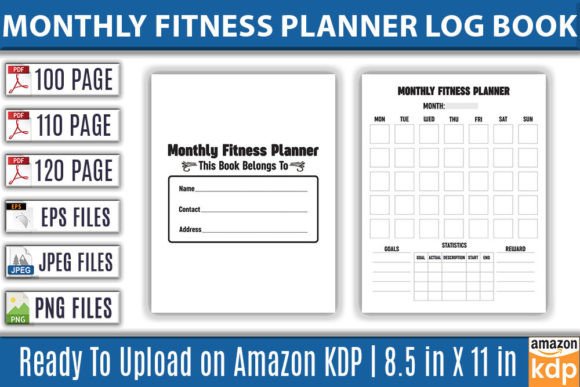
Before uploading a planner to Amazon, you need a complete, print-ready interior file. This is the Monthly Planner Log Book KDP Interior. It defines every page's layout, from the monthly log spreads to any supplementary pages. Its primary role is to transition your digital design into a professionally printed book through KDP's printing system. The interior file is the final asset in your design workflow, but its preparation influences every earlier step.
This file must be meticulously prepared to match KDP's technical requirements. Specifications like the trim size (8.5×11 inches), lack of bleed settings, and high-resolution 300 DPI quality are not arbitrary. They ensure the printed book looks sharp, pages align correctly, and text is crisp. A KDP-tested file, as mentioned in the features, signifies it has already been validated against Amazon's upload system, saving you from potential formatting errors and revisions after submission.
Integration into the Creator's Workflow: From Design to Upload
The journey of a Monthly Planner Log Book begins with concept and ends with a live product on Amazon. The interior file sits at the convergence of design, testing, and finalization.
Phase 1: Design and Assembly
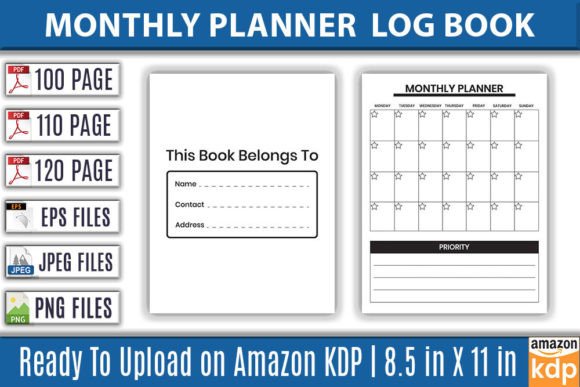
Whether you are a professional designer or a publisher using pre-made templates, the assembly phase focuses on creating 100, 110, or 120 pages of coherent content. This involves structuring monthly calendars, weekly or daily log spaces, goal-setting pages, and trackers. Here, the provision of editable original files (EPS) is invaluable. These files allow for customization—changing fonts, colors, or layout elements to suit a specific niche audience, such as entrepreneurs or educators. Working with the EPS files before finalizing the PDF is a critical step in tailoring the product.
Phase 2: Quality Control and Formatting
After design, the next process is exporting and testing. The primary deliverable is the Print PDF file for instant download. This PDF must be absolutely print-ready. Practical implementation here means checking every detail: margins, page sequence, and image resolution. The inclusion of bonus high-resolution JPG files and PNGs with transparent backgrounds aids in this phase. These assets can be used for marketing—creating mockup images for your KDP listing—or for future modifications. Testing the PDF on the KDP platform directly, as noted, is the ultimate quality control step, preventing costly upload rejections.
Phase 3: Publication and Beyond
Once uploaded, the Monthly Planner Log Book KDP Interior becomes a static part of your published product. However, its impact on long-term use is significant. A well-organized interior enhances the planner's usability for the end customer. A clear monthly log layout helps a freelance professional track projects and deadlines efficiently. The consistency in page design across 120 pages ensures a seamless user experience from January to December. This long-term usability translates into positive reviews and repeat customers, which are vital for success on Amazon.
Practical Applications for Diverse Users
The utility of a ready-to-upload interior extends across various user groups. Each can integrate this asset into their unique workflow.
For the Entrepreneur or Small Business Owner: Time management is currency. Using this interior to quickly publish a planner allows them to brand a physical product with their company ethos or sell it as a supplementary revenue stream. They can use the editable EPS files to insert company logos or specific productivity frameworks before publishing.
For the Educator or Blogger: Content creation often involves planning editorial calendars, course outlines, or project timelines. They could use the published planner themselves as a tool, or publish it as a resource for their audience. The clean, no-bleed 8.5×11 format is ideal for note-taking and planning large projects.
For the Hobbyist or Freelancer: Simplicity and speed are key. A tested, ready-to-upload interior eliminates the technical barriers to publishing. They can focus on niche marketing—for example, targeting a planner for gardening logs or freelance finance tracking—rather than struggling with graphic design software.
Key Considerations for Smooth Integration
To seamlessly integrate a pre-designed Monthly Planner Log Book KDP Interior into your publishing process, consider these factors.
Compatibility with Your Overall Plan
Ensure the interior's page count (100, 110, 120) aligns with your product's promised value. A more comprehensive planner might need the 120-page version. Verify that the trim size fits your vision; 8.5×11 inches is a standard, generous size perfect for detailed logging.
Usability and Organization
Examine the sample pages. Does the monthly log layout provide ample space for appointments, tasks, and notes? How are the pages sequenced? A logical flow—monthly view followed by blank or project pages—is essential for the end-user's efficiency. Your customer's positive experience hinges on this internal organization.
Efficiency in Your Production Workflow
The "ready to upload" claim should be validated. Having all required files (PDF, EPS, PNG, JPG) in one package streamlines your workflow. You can use the PDF to upload immediately, the PNGs for creating Amazon listing graphics, and the EPS files if you plan a series of planners and need consistent modification.
Quality Control for Professional Results
The 300 DPI and KDP-tested features are your assurances of quality. Before final purchase or use of such an interior, always preview the PDF in a viewer at 100% zoom to check for blurry text or images. This simple step mirrors KDP's own checks and safeguards your investment.
Making the Interior Work for Your Specific Goals
Finally, the Monthly Planner Log Book KDP Interior is a tool. Its effectiveness depends on how you wield it within your broader business or creative goals.
If your goal is rapid market entry, use the instant download PDF and upload it directly. Leverage the bonus JPG files to create compelling "look inside" mockups for your sales page.
If your goal is building a branded product line, utilize the editable EPS files. Consistently modify the color schemes and header designs across multiple planner types (financial, health, business) to create a recognizable brand aesthetic.
If your goal is serving a specific community, like productivity-minded users or educators, consider how the interior's log pages function. You might supplement the uploaded planner with a digital guide on how to use its layout for goal setting or curriculum planning, adding value beyond the physical book.
In essence, a high-quality monthly planner interior is the engine of your KDP planner product. By understanding its features—from page count to file formats—and thoughtfully integrating it into your publication workflow, you transform a digital file into a tangible tool that helps others organize their lives, while building a sustainable publishing endeavor for yourself.