Evaluating the Mandala Coloring Pages KDP Interior 146 Digital Asset
For creators operating in digital publishing, surface design, or personal crafts, finding a reliable and versatile graphic resource can be a significant hurdle. The Mandala Coloring Pages KDP Interior 146 package presents itself as a solution, offering a collection of intricate mandala designs formatted for commercial and personal use. This analysis examines the package’s contents, its stated features, and its practical application across several common creative workflows.
Core Composition and Technical Specifications
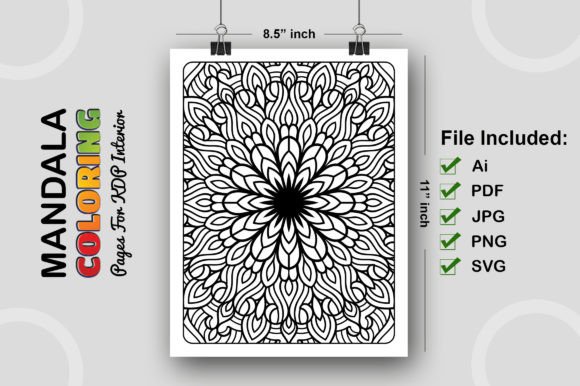
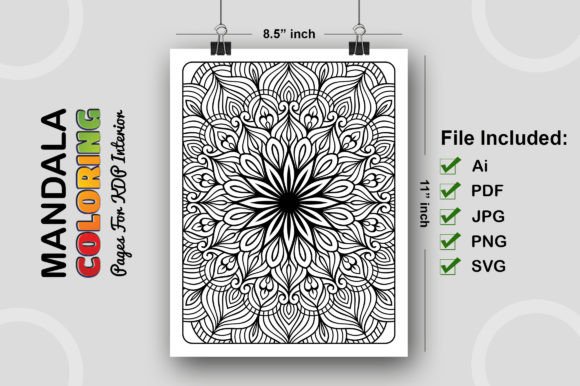
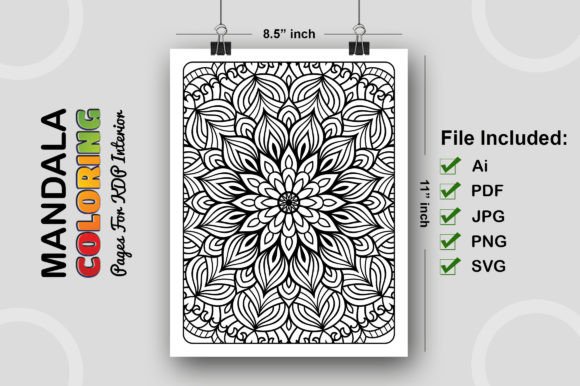
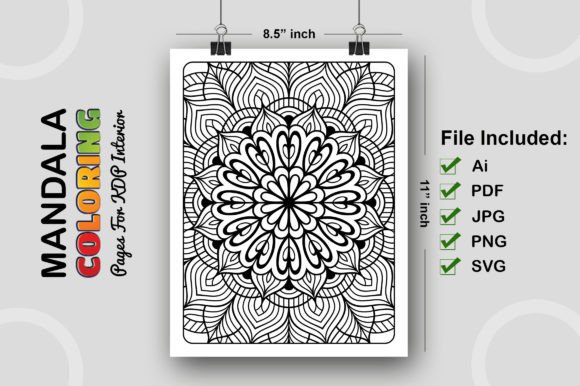
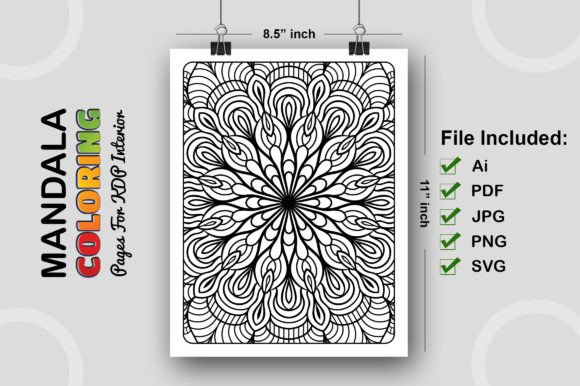
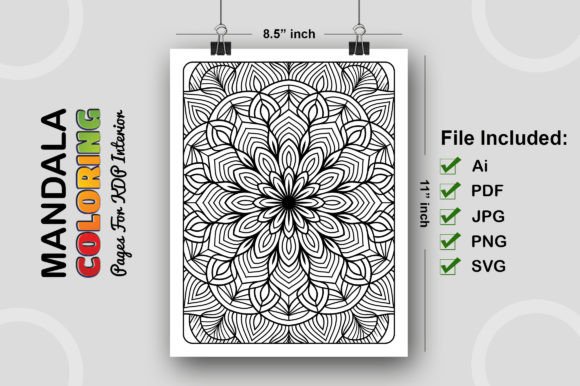
The product is distributed as a zip file containing multiple file formats for the same set of 146 mandala designs. This multi-format approach is a primary strength. You receive one Adobe Illustrator (AI) file, one PDF, one SVG, one JPG, and one PNG. Each design is presented in black and white line art, which is the standard and most useful format for coloring page interiors and adaptable graphic work.
The technical details are clearly stated: the artwork is sized at 8.5 x 11 inches, a standard US letter format that aligns perfectly with Kindle Direct Publishing (KDP) paperback interior dimensions. It is noted as having no bleed, which is correct for an interior coloring book page where artwork is contained within the margins. The inclusion of a print-ready PDF and high-resolution (300 DPI) JPG and PNG files meets basic professional requirements for print and digital use. It is important to note, as the provider does, that any preview images shown in marketing are not part of the zip file; you receive only the 146 design files themselves.
Practical Utility and Project Applications
The value of Mandala Coloring Pages KDP Interior 146 lies in its potential for reuse and adaptation. While its title and core formatting target KDP coloring books, the description rightly suggests broader applications. The AI and SVG files are vector formats, which are crucial for scalability without quality loss. This makes the designs suitable for projects where resizing is necessary, such as creating large-format posters or scaling down for sticker sheets.
For a KDP publisher, the PDF provides a straightforward, ready-to-upload interior. An entrepreneur looking to sell physical coloring books through other print-on-demand services could use the high-resolution JPGs. The PNG files, with their transparent backgrounds (assuming the line art is on a transparent layer), are immediately useful for website graphics, overlay images, or digital greeting card designs.
The suggestion of use for textile designs, like t-shirts, hinges on the quality of the vector files. Complex mandalas can be excellent for all-over prints or focal points on apparel, provided the line work is clean and closed in the source Illustrator file. This would require testing, but the provision of the native AI file gives a designer direct access to edit paths if needed for a specific production method.
Key Considerations for Different User Groups
Self-Publishing Authors on KDP: This group is the most direct beneficiary. A complete set of 146 pages can form multiple coloring book volumes or serve as a substantial single volume. The consistent size and no-bleed format reduce layout work. However, success depends on market demand for mandala themes and the user's ability to handle front matter, covers, and marketing.
Small Business Owners and Crafters: Those selling on Etsy or at local markets could use these assets to produce printed coloring sheets, craft kits, or, as mentioned, applied designs on products like greeting cards and invitations. The flexibility to output at different resolutions is key here.
Freelancers and Marketers: A graphic designer might use these as base elements in a larger client project, such as creating branded mindfulness materials for a corporate wellness program. The professional tone of the designs—neither overly childish nor overly simplistic—makes them suitable for an adult audience.
Educators and Serious Hobbyists: Teachers could integrate them into art or mindfulness activities. Hobbyists enjoy a vast library of designs for personal coloring without the need to draw them manually. The black-and-white format is perfect for all coloring mediums.
Assessment of Usability and Workflow Integration
From a usability standpoint, having five formats accelerates workflow. A user without vector software can rely on the PNG or JPG. A professional with Illustrator can exploit the full potential of the AI file for customization. The consistency across the 146 pages is a critical factor; a user can expect a uniform style and line weight, which ensures a cohesive final product if using multiple designs together.
Potential limitations are inherent in any pre-made asset pack. The designs are fixed. While versatile in application, their artistic style is determined. A user needing very specific, themed mandalas (e.g., seasonal, animal-integrated) may find this pack too general. Furthermore, the “no bleed” specification, while correct for interiors, means these files are not formatted for projects requiring full-bleed printing, such as standard poster creation, without manual extension of the artwork.
The long-term value is reasonable. A one-time acquisition provides a reusable library. For a KDP publisher, it can generate multiple book iterations. For a crafter, it can supply designs for numerous product batches. The digital nature means no physical degradation or loss.
Final Observations on Audience Fit
Mandala Coloring Pages KDP Interior 146 is a pragmatic resource for individuals who need a quantity of ready-made, thematically consistent mandala artwork. Its worth is most pronounced for those who operate in commercial publishing or product creation and wish to save time on original illustration. It is less suitable for artists seeking unique, one-off designs or for projects requiring heavily modified or themed mandala art.
The package’s strength is its format variety and clear technical alignment with print-on-demand interior standards. Its effectiveness depends entirely on the user’s skill in deploying the assets within their specific platform or manufacturing process. For the target audience of entrepreneurs, creators, and hobbyists described, it represents a functional tool that, when applied with strategic market understanding and production knowledge, can form a solid foundation for various creative and commercial projects.