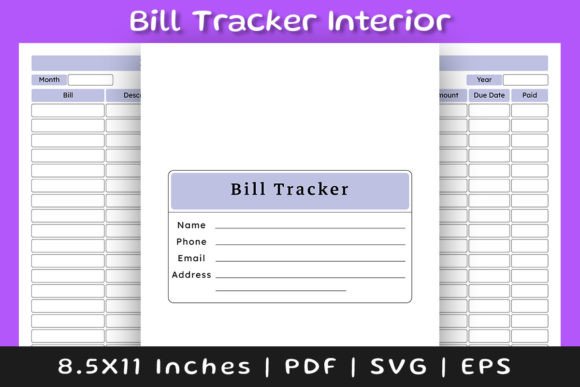
The Essential Organizer: How a Bill Tracker Log Book Interior Empowers Modern Financial Management
In an era defined by digital convenience, a surprising trend persists: the enduring value of a physical, structured system for managing personal or business finances. The Bill Tracker Organizer Interior represents a purposeful response to this need, offering a meticulously designed framework within a low-content book. It is more than just a collection of pages; it is a dedicated tool engineered to transform financial tracking from a scattered chore into a streamlined, reliable practice. This interior template provides a physical anchor in the digital financial world, catering to a growing desire for tactile control and visual oversight over one’s economic life.
Reclaiming Control in a Complex Financial Landscape
The contemporary financial landscape is fragmented. While apps and automated payments offer speed, they often disperse information across multiple platforms, creating a cognitive disconnect. Users can lose the holistic view of their obligations, deadlines, and spending patterns. This is where the practical utility of a Bill Tracker Organizer Log Book interior becomes profoundly relevant. It serves as a centralized, offline command center. By committing to manually logging bills, due dates, amounts paid, and payment methods, individuals engage actively with their finances, fostering greater awareness and accountability.
This move towards manual tracking aligns with broader lifestyle and productivity trends. Professionals, entrepreneurs, and freelancers, particularly, are seeking tools that reduce digital noise and enhance focus. A physical log book does not suffer from notifications, updates, or interface changes. It provides a consistent, uninterrupted space for a critical task. This shift is not a rejection of technology but a strategic complement to it—using a reliable analog system to corral the digital data.
The Design Philosophy Behind a Functional Interior
A well-crafted Bill Tracker Organizer Interior is built on principles of clarity and efficiency. The typical design for a 120-page, 8.5 x 11-inch book includes structured fields for essential data: bill name, due date, amount, status (paid/unpaid), and payment confirmation. This large format provides ample space for clear handwriting and additional notes. The "no bleed" specification ensures that the printed pages are clean and professional, with all critical content safely within margins. The provision of high-resolution 300 DPI files guarantees that the final printed product is sharp and legible, a non-negotiable quality for a functional tool.
The inclusion of editable source files (PDF, EPS, SVG) in a compressed ZIP file is a nod to the creator economy. It allows publishers on platforms like Amazon KDP to not only use the interior but also to adapt it. A marketer might add a branded header; an entrepreneur might integrate specific categories for their small business expenses. This flexibility underscores how the interior template serves as a foundational building block, enabling creators to produce a tailored product for their specific audience.
Meeting Changing Needs and Workflows
The relevance of this product grows from observable shifts in user preferences and workflows. First, there is a heightened desire for financial transparency. Whether managing household budgets, freelance project invoices, or small business operational costs, people want a single, trustworthy source of truth. A dedicated log book eliminates the need to search through emails, bank statements, and app histories to reconcile payments.
Second, the act of writing itself has cognitive benefits. The physical process of recording a payment reinforces the transaction in memory and can create a stronger sense of closure and responsibility. For those building better financial habits, this tactile engagement is a practical advantage over a passive digital log. Furthermore, in collaborative settings—such as a family or a small business partnership—a physical book left in a common area can facilitate communication and shared responsibility more intuitively than a shared digital file might.
Practical Applications and Real-World Utility
Consider a freelance graphic designer. They might use a Bill Tracker Organizer to track recurring software subscription bills, client invoice due dates, and tax estimate payments. Having all this in one book next to their workstation provides quick reference and prevents overlooked payments that could disrupt service or incur late fees. For a household, it could be the central tool for managing utilities, mortgages, credit cards, and memberships, perhaps reviewed weekly by both partners to align on financial priorities.
The utility extends into small business operations. A café owner might use it to track vendor invoices, lease payments, and equipment loan schedules. The large page size allows for expansive monthly layouts or dedicated sections for different expense categories. This moves beyond simple reminder lists into a comprehensive financial dashboard that is portable, private, and permanent.
Connecting to Larger Developments in Productivity and Publishing
The demand for such interiors is intertwined with two significant developments: the rise of the low-content book publishing market and the ongoing evolution of personal productivity tools. KDP and similar platforms have democratized publishing, allowing creators to address niche needs—like specific financial tracking—without writing a full manuscript. The Bill Tracker Organizer Interior is a perfect product for this space: it fulfills a clear, functional need and can be produced efficiently from a ready-made, print-ready template.
Simultaneously, the broader productivity industry continues to recognize that different tasks require different tools. Highly creative or analytical work might benefit from digital software, but routine, administrative tracking often gains reliability from simplicity. This interior is a specialist tool for a specialist task. Its existence acknowledges that a one-size-fits-all digital solution is not optimal for everyone, especially for those who value minimalism, offline access, or a break from screen-based management.
Furthermore, the emphasis on high-quality print-ready files speaks to a consumer expectation of professionalism. Even self-published tools are expected to look and feel authoritative. The 300 DPI resolution and clean EPS/SVG vector files ensure that the final printed log book conveys quality and seriousness, reinforcing the user’s confidence in the system they are using.
Why This Attention is More Than a Nostalgic Trend
The attention paid to physical organizers like this is not merely a nostalgic retreat to paper. It is a calculated choice for effectiveness. In a world saturated with digital options, making an intentional choice for a simpler, focused tool can be a form of productivity optimization. It reduces the chances of error from auto-fill mistakes, the risk of distraction from other app features, and the vulnerability of data being lost in a software update or platform shutdown.
The Bill Tracker Organizer Log Book interior, therefore, sits at a meaningful intersection. It meets a practical need for financial clarity, supports contemporary desires for controlled and focused workflows, and leverages the accessible technology of modern print-on-demand publishing. It empowers its users—from busy professionals to meticulous households—to build a more reliable, visible, and manageable financial process, one logged entry at a time.