The Strategic Role of a Daily Self Care Planner for KDP Interior
In a landscape where productivity is often measured by output, the concept of self-care can seem like a luxury, or even a distraction. Yet, for entrepreneurs, professionals, creators, and decision-makers, the deliberate practice of self-care is a foundational operational strategy. A Daily Self Care Planner for KDP Interior transforms this abstract concept into a tangible, actionable system. It is not merely a journal or a collection of blank pages; it is a professionally designed, ready-to-use framework engineered for integration into the KDP (Kindle Direct Publishing) ecosystem. Its purpose is to provide a structured, private space for individuals to systematically manage their well-being alongside their professional ambitions.
Beyond Checklists: A Framework for Strategic Renewal
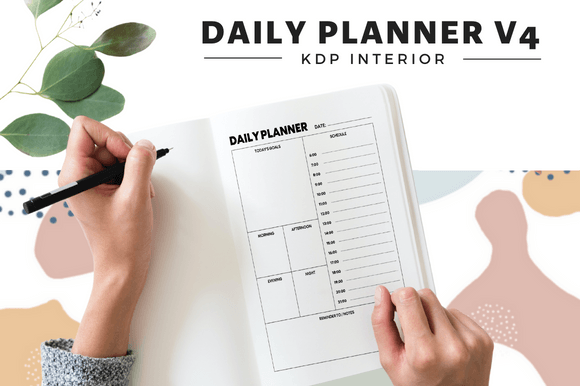
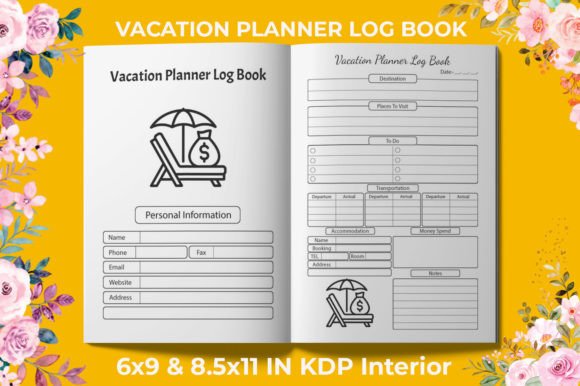
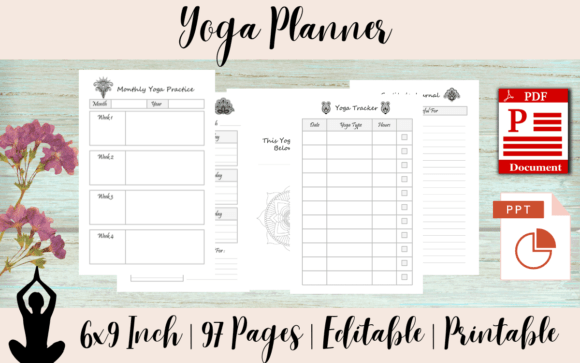
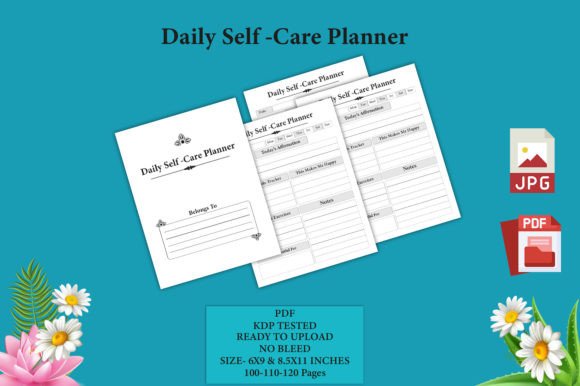
The value of this planner lies in its intentional design as a KDP interior. Created as a high-quality, 100–120-page PDF and JPG file in 6x9 or 8.5x11 inch sizes with CMYK color and 300 PPI resolution, it is a product ready for immediate upload and sale. For the end-user—your potential customer—this translates to a polished, professional tool. But its strategic utility goes deeper. A thoughtful Daily Self Care Planner for KDP Interior moves beyond generic daily checklists. It offers a consistent format that encourages users to engage in three critical processes: reflection, prioritization, and accountability.
Reflection is the bedrock of sound decision-making. By dedicating space to note physical energy, emotional state, and mental focus, the user gathers data about their personal operating conditions. This data is as crucial as any market report for an entrepreneur. It informs whether to schedule a critical client negotiation in the morning or afternoon, whether a creative session should be extended or abbreviated, and when to pause for restorative breaks to prevent burnout-driven errors.
Integrating Well-being into Operational Planning
For the busy professional, time is the most constrained resource. A haphazard approach to self-care often fails because it isn't treated as a non-negotiable part of the schedule. A dedicated planner forces integration. Consider a freelancer juggling multiple client projects. Using a Daily Self Care Planner for KDP Interior, they might block time not just for tasks, but for a midday walk, a hydration goal, and a five-minute mindfulness practice. This isn't about indulgence; it's about maintaining the cognitive and physical resources required to deliver high-quality work consistently. The planner becomes the operational document where professional tasks and personal sustainability are planned in tandem, ensuring one does not chronically eclipse the other.
Practical Applications and Planning Tips
The use cases are varied yet grounded in realistic needs. An educator might use the planner to track stress levels throughout the academic week, planning proactive recovery activities on Wednesday to ensure resilience for Friday's demands. A small business owner could utilize the gratitude or accomplishment sections to combat the isolation of entrepreneurship, consciously noting small wins to maintain motivation and strategic vision.
- Link Care to Objectives: Do not log self-care activities in isolation. On the page, note how a specific activity (e.g., "30-minute uninterrupted lunch") directly supported a professional outcome (e.g., "post-lunch, solved the coding bug with clearer focus").
- Quantify Where Possible: Track sleep hours, water intake, or minutes of deep work. This provides objective metrics to correlate with productivity or creativity levels.
- Schedule it Like a Meeting: Treat the time spent filling out your Daily Self Care Planner for KDP Interior as a mandatory daily briefing. Its effectiveness depends on regularity.
The Risks of Uncontextualized Use
Like any tool, a planner's effectiveness is dictated by the user's intent. The primary risk of using a Daily Self Care Planner for KDP Interior without clear goals is the descent into perfunctory box-checking. If the entries become robotic—"drank water, slept 7 hours"—without connection to one's broader state or goals, the tool loses its strategic power. It becomes another administrative task, adding to cognitive load rather than reducing it.
A second risk is compartmentalization. If self-care planning is kept entirely separate from business or project planning, it fosters a false dichotomy where "work" and "care" are opposing forces. The planner should serve as a bridge, helping the user see how today's managed energy levels enable tomorrow's presentation rehearsal. Without this integrative mindset, the planner's long-term value diminishes.
Crafting an Intentional Practice
Approach your Daily Self Care Planner for KDP Interior with the same strategic lens you apply to a business plan. Begin by defining what "better results" mean for you. Is it sustained creativity without burnout? Is it improved leadership patience? Is it consistent physical health to support long work hours? Your answers dictate how you engage with the planner's sections.
- Start with a Weekly Review: Before diving into daily pages, use a blank sheet or the planner's notes section to set a weekly well-being intention. For example, "This week's focus: managing reactive stress to preserve decision-making clarity."
- Customize the Framework: The provided layout is a starting point. Use it flexibly. If a section for "creative sparks" is more relevant than "meals planned," adapt the labels or entries to serve your unique context.
- Review and Adjust Quarterly: Periodically analyze your entries. Look for patterns. Do productivity dips consistently follow days with poor sleep logged? Does client satisfaction feedback correlate with days you recorded pre-call meditation? Use this analysis to refine both your self-care practices and your professional workflows.
The Long-Term Value for Professionals and Creators
The cumulative effect of daily, intentional self-care planning is the development of a sustainable professional rhythm. For the marketer, this might mean fewer impulsive, poorly-conceived campaign changes made under stress. For the blogger, it could result in a more consistent publishing schedule fueled by managed energy rather than erratic inspiration. For the decision-maker, it builds the resilience to handle high-stakes choices without corrosive anxiety.
Ultimately, a well-used Daily Self Care Planner for KDP Interior contributes to what might be called personal asset management. Your attention, health, creativity, and emotional stability are the assets that drive all professional outcomes. This planner provides the ledger to track, maintain, and invest in those assets deliberately. In a digital product landscape, offering this tool via KDP provides creators and publishers a way to deliver concrete value—a system for sustainable success—while building their own business. It is a product that serves the operator behind the operation, recognizing that the quality of the output is inextricably linked to the condition of the source.
When utilized with strategic purpose, the daily entries cease to be mere reflections. They become the data points for a more intelligent, adaptive, and enduring way to work and create. The planner shifts from being a record of care to being an instrument for planning a career and a life that can thrive, not just survive, under pressure.