A Practical Guide to Using a Goal Planner Log Book KDP Interior
In the world of self-publishing, particularly on Amazon's Kindle Direct Publishing (KDP) platform, the product you deliver is paramount. For creators focusing on productivity tools like planners and journals, the interior design—the pages a user interacts with—is the core of the offering. A Goal Planner Log Book KDP Interior is not merely a collection of predesigned pages; it is a specialized digital product crafted to function as the complete, printable structure of a goal-tracking journal. Its primary use is within the workflow of KDP publishers who aim to sell physical, printed goal planner books.
Where the KDP Interior Fits in the Publishing Process
The journey from idea to a finished book on Amazon involves several distinct phases. After conceptualizing the planner's purpose and target audience, the next critical step is producing the interior file that meets KDP's technical specifications. This is precisely where a pre-designed Goal Planner Log Book KDP Interior becomes an instrumental asset. It bridges the gap between design capability and publication readiness. For many publishers—especially entrepreneurs, marketers, and freelancers without extensive graphic design experience—it provides a foundational template that can be customized or used as-is to accelerate the publishing timeline.
This interior file acts as the skeleton of your book. It dictates the user experience: how the goal-setting pages are organized, the spacing for writing and reflection, and the overall visual flow that guides the planner's user. Integrating it into your workflow typically occurs after market research and before the final upload and quality checks on KDP.
Core Features and Their Workflow Implications
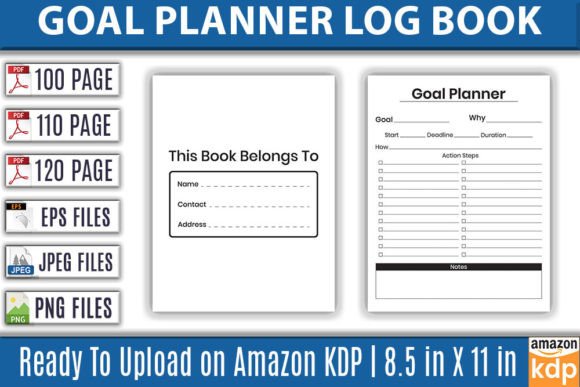
A quality Goal Planner Log Book KDP Interior, as described, comes with specific technical attributes that directly impact the publishing process and the final product's quality.
- Page Counts (100, 110, 120): These options allow you to tailor the product length to market expectations and printing cost considerations. A 120-page planner might suit an intensive annual goal system, while a 100-page version could be ideal for a quarterly focus.
- Trim Size (8.5×11 inches): This standard US letter size is a popular format for planners, ensuring compatibility with KDP's printing systems without requiring adjustments.
- 300 DPI Quality: High resolution is non-negotiable for print. This feature guarantees that all text and graphic elements appear sharp and professional in the physical book.
- No Bleed Settings: A "no bleed" interior means all content is safely within the page margins. This simplifies the design process and is perfectly suited for text-heavy, functional interiors like planners where full-color edge-to-edge images are not required.
- KDP Tested: Perhaps the most crucial feature for workflow efficiency. This verification means the file has already been uploaded to the KDP system to check for formatting errors, ensuring your upload process will be smooth and reducing the risk of rejection or customer complaints about print quality.
Integration with Other Tools and Assets
A successful KDP publication rarely relies on a single asset. The Goal Planner Log Book KDP Interior is a central component that interacts with several other elements in a publisher's toolkit.
First, it must be paired with a professionally designed cover. The interior's page count and trim size dictate the spine width calculation for the cover file. Second, the included file formats—like the editable EPS source files—allow for integration with graphic design software such as Adobe Illustrator. This enables those with design skills to modify layouts, change fonts, or add branding elements before exporting the final PDF for KDP.
The bonus files, including high-resolution JPGs and PNGs with transparent backgrounds, offer further utility. They can be repurposed for marketing materials, social media graphics to promote the planner, or even used in digital companion products. For bloggers or educators creating content about goal-setting, these image files can serve as visual aids in tutorials or articles.
A Practical Implementation Scenario
Consider a small business owner who wants to create a branded goal planner for their team and also sell a generic version online. Their workflow might look like this:
- They purchase the Goal Planner Log Book KDP Interior package, focusing on the 110-page EPS editable file.
- Using the EPS file in their design software, they incorporate their company logo and color scheme into the header of each weekly log page for the internal version.
- For the public KDP version, they use the pristine, pre-designed Print PDF file directly, as it is already KDP tested and ready to upload.
- They employ the bonus PNG files to create a series of promotional posts on Instagram, showcasing the planner's clean layout.
- Finally, they combine the interior PDF with a purchased cover file, input the correct page count for spine calculation, and upload both to KDP, confident in the interior's compatibility.
This process highlights how the interior asset moves from a static product to an adaptable component within a broader creative and commercial workflow.
Factors for Long-Term Usability and Consistency
For publishers building a series of planners or aiming for repeat sales, consistency and quality control are vital. A well-structured Goal Planner Log Book KDP Interior promotes both.
The standardized trim size and DPI ensure every printed copy maintains a uniform professional quality. The organization of the interior pages—the logical sequence of goal-setting sections, monthly reviews, and daily logs—creates a predictable and helpful user experience that can foster customer loyalty. If you publish multiple planners (e.g., for fitness, finance, or career), using interiors from the same source or with compatible layouts can establish a recognizable brand identity across your KDP catalogue.
Furthermore, the availability of original editable files provides long-term flexibility. As your understanding of your audience deepens, you can iteratively improve subsequent editions by modifying the EPS files, perhaps adding new tracking sections or adjusting the instructional text, without starting from scratch each time.
Preparation and Workflow Efficiency
The greatest practical benefit of using a ready-made, KDP-tested interior is the dramatic reduction in pre-publication hurdles. The preparation phase shifts from technical design and troubleshooting to strategic customization and marketing. Instead of spending days ensuring margins are correct and that fonts are embedded properly, you can focus on crafting your book's description, researching keywords for Amazon SEO, and planning your launch campaign.
This efficiency is particularly valuable for freelancers and creators who manage multiple projects. It turns the complex task of interior book formatting into a more straightforward integration step. The key is to treat the interior as a robust, reliable module within your system. Download it, verify you have the correct PDF for upload, pair it with a cover, and proceed to the KDP upload portal. The "KDP tested" feature is essentially a pre-flight check, eliminating a common point of failure in the self-publishing workflow.
Ultimately, a Goal Planner Log Book KDP Interior is more than a digital download. It is a process accelerator for serious publishers. By providing a validated, high-quality foundation, it allows professionals, educators, and hobbyists alike to channel their energy into the aspects of publishing that truly differentiate their product—the marketing, the audience building, and the development of complementary content—while resting assured that the core product they offer to customers is structurally sound and professionally presented. Its role is to handle the technical baseline, freeing you to focus on the goals of your publishing business.