Choosing the Right Sudoku Puzzle Activity Interior for Your Project
For creators, educators, and entrepreneurs looking to publish a puzzle book, a pre-made Sudoku Hard Puzzle Activity Interior can seem like a perfect shortcut. It promises a ready-to-use, tested product that saves countless hours of design and layout work. The appeal is real, especially for those venturing into platforms like Amazon KDP. However, the decision to integrate such an interior into your project isn't as simple as downloading a file and hitting publish. A thoughtful approach is required to ensure the final product meets both your standards and your audience's expectations.
Understanding What a Puzzle Activity Interior Really Provides
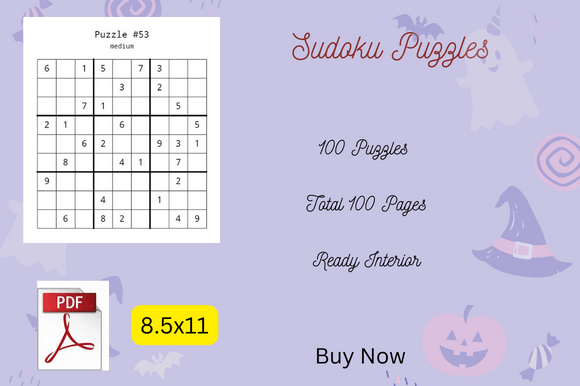
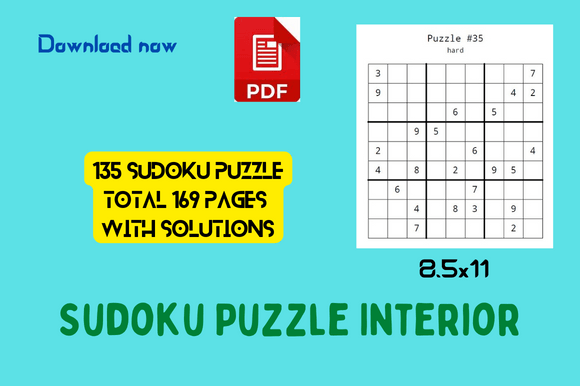
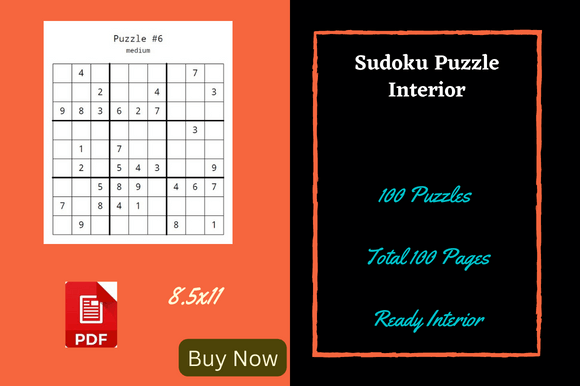
At its core, a Sudoku puzzle activity interior is a digital product—typically a PDF file—containing the core content of a book. The listing described specifies 100 medium-difficulty puzzles formatted for a standard 8.5" x 11" trim size, with KDP quality checks already performed. It's important to recognize that this is only the interior. It does not include a cover, title page, preface, instructions, or any supplementary material. This distinction is fundamental and is often the first point where projects can falter.
Many buyers, excited by the promise of 100 ready puzzles, overlook the "interior ONLY" note. They assume the download is a complete, publishable book file. This misunderstanding leads to a last-minute scramble to design a cover and front matter that cohesively matches the interior's style and quality. The result can be a disjointed book where the cover feels amateurish compared to the professional interior, harming the product's marketability and perceived value.
Mistaking "Medium" for a Universal Fit
The terminology "Sudoku Medium Puzzle Activity Interior" refers to the puzzle difficulty level. A common error is applying this interior to a project targeted at absolute beginners or very young children. Medium-level Sudoku puzzles require a foundational understanding of the game's logic. Using them for a "Kids Activity Book" aimed at first-time solvers, as the template description suggests, could frustrate the end-user. The book might be returned or receive poor reviews, damaging your brand's reputation on the platform.
A better approach is to critically assess your target audience. If you are genuinely creating for kids, seek an interior specifically graded for beginners or with progressive difficulty. If you intend the book for adults or older children seeking a challenge, this medium interior is suitable. Always sample a few puzzles from the interior (if possible) before purchase to gauge the true difficulty.
Ignoring the Trim Size and Layout Constraints
The interior is fixed at an 8.5" x 11" trim size with no bleed. This is excellent for standard US letter-sized books but becomes a problem if you envision a different format, such a compact 6" x 9" book for portability. Attempting to resize or reformat a fixed PDF interior is technically complex and often results in misaligned grids, distorted numbers, or poor page margins. It's a recipe for a product that fails KDP's technical review.
Before downloading, confirm your desired book dimensions. If 8.5" x 11" works for your plan, this interior is a fit. If not, this specific product becomes a poor choice, and you should look for an interior designed for your chosen trim size or consider creating your own layout from scratch.
Overestimating the "Ready-to-Upload" Claim
The phrase "ready to be uploaded" is enticing, but it's rarely the final step. The interior might be technically compliant, but a publishable book requires more. You must integrate the interior PDF into a complete manuscript file that includes your custom cover, copyright page, any introductory instructions for the solver, and a back matter if desired. Failing to add clear solving instructions, especially for a book marketed to newcomers, is a frequent oversight. Readers appreciate guidance.
Treat the interior as a high-quality component. Plan the surrounding elements—cover design, front matter, blurb—with equal care. Use the clean, professional layout of the puzzles as inspiration for the overall book's aesthetic. This ensures a unified and polished final product.
Practical Advice for a Successful Integration
To avoid these pitfalls and leverage a Sudoku puzzle activity interior effectively, follow a structured pre-publishing checklist.
First, define your project's specifications clearly. Know your exact trim size, target audience (age and skill level), and the total page count you aim to offer. This will immediately filter out incompatible interiors.
Second, scrutinize the product description. Look for details like the number of puzzles, page count, presence of solutions (these often aren't included, which is another point to note), and any design elements like fonts or grid styles. Ensure the difficulty level matches your book’s title and marketing copy. A book titled "Easy Sudoku for Beginners" containing medium puzzles is misleading.
Third, plan the complete book architecture before purchase. Sketch out what pages will come before and after the puzzle interior. Write your instruction page. Begin your cover design concept. Having this blueprint ensures the interior you buy slots seamlessly into your existing plan, rather than forcing you to build a plan around it.
Finally, conduct a quality audit after download. Open the PDF. Check every page for consistency: are all puzzle grids clearly printed? Are there any formatting oddities on page 100 versus page 1? Verify that the file truly is 100 pages of puzzles. This final check prevents the surprise of a flawed file disrupting your publishing timeline.
A Realistic Example of a Better Approach
Imagine a freelance designer creating a Sudoku book for adults to relax with during travel. They decide on an 8.5" x 11" size for easy readability. They choose this specific Sudoku Hard Puzzle Activity Interior because "medium" difficulty suits their audience. Before buying, they draft a simple two-page introduction explaining Sudoku rules and tips for medium puzzles. They design a cover that uses clean, modern fonts that complement the interior's minimal puzzle grids. After downloading the interior, they combine it with their front matter in a PDF editor, creating a single, cohesive manuscript file. The book feels professional and intentional, not just a collection of puzzles slapped behind a cover.
Making the Interior Work for Your Goals
A pre-designed Sudoku puzzle activity interior is a powerful tool. It eliminates the most tedious part of puzzle book creation: the individual layout of 100 puzzle grids. Its value lies in the time saved and the assurance of a KDP-tested format. By understanding it as a premium component rather than a finished product, you can avoid the common errors of mismatched difficulty, format issues, and incomplete books.
Your focus should shift from "Is this interior ready?" to "Is this interior the right core for my complete book?" With careful audience alignment, format verification, and complementary design work, this template can become the foundation of a high-quality, satisfying product that stands out in the marketplace and provides real enjoyment for solvers. That is the ultimate goal—and with mindful preparation, it is entirely achievable.