Word Search Puzzles as a Practice of Focus and Pattern Recognition
Within the broad landscape of puzzles and games, the word search holds a distinct and enduring position. It is often perceived as a simple pastime, a quiet activity found in newspapers or children's activity books. However, a deeper examination reveals that the practice of engaging with word search puzzles, particularly through dedicated and formatted resources like the Word Search Puzzle Interior Practice, offers a multifaceted exercise for the mind. This practice transcends mere entertainment, touching on cognitive development, educational utility, and even commercial creation for independent publishers.
The Core Mechanics and Cognitive Engagement
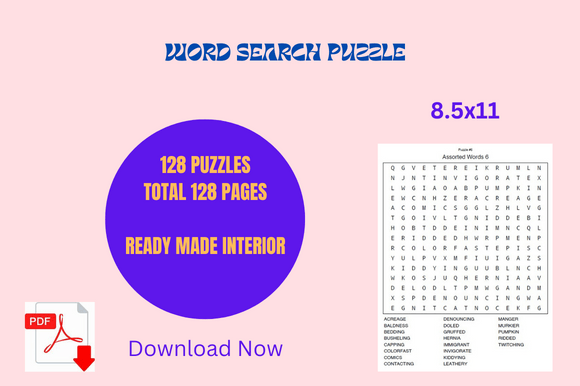
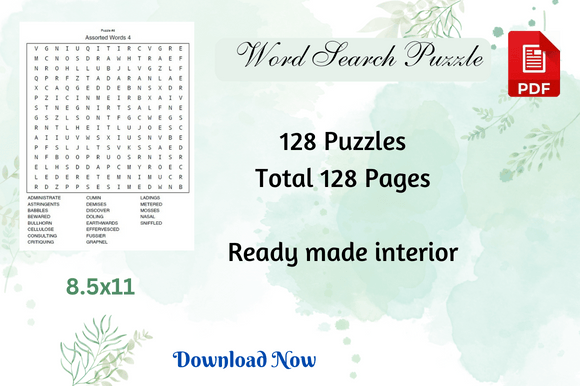
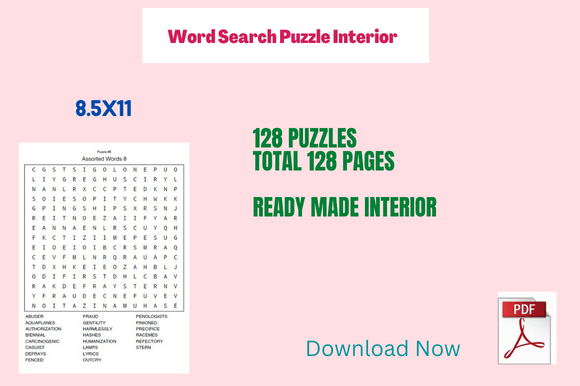
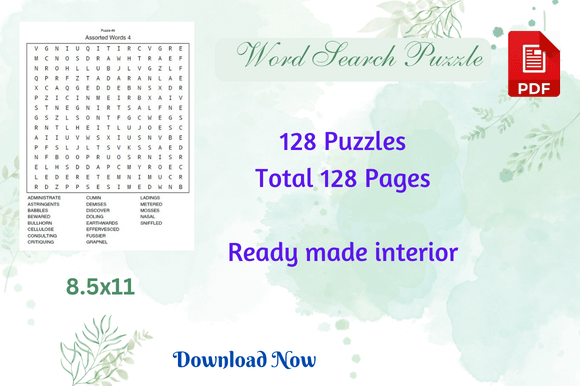
A word search puzzle presents a grid of letters, seemingly random, within which a list of target words is hidden horizontally, vertically, diagonally, and sometimes backwards. The solver's task is to scan the grid, identify sequences, and mark each found word. This process is fundamentally an exercise in visual scanning and pattern recognition. The brain must rapidly process clusters of letters, comparing them against known vocabulary stored in memory, and isolate the target pattern from the surrounding noise of irrelevant characters.
This continuous scanning is not a passive act. It requires sustained attention and concentration. As one puzzles through a KDP interior ready for printing collection of 106 puzzles, the mind practices maintaining focus on a single, detailed task, filtering out distraction. This can have a calming, almost meditative effect, as the cognitive load is directed into a structured channel. The satisfaction of finding a word reinforces the effort, creating a positive feedback loop that encourages continued engagement and the development of patience.
Educational Applications and Skill Reinforcement
For educators and parents, word searches are a versatile tool. When puzzles are themed—for instance, around scientific terminology, historical figures, or literary vocabulary—they serve as a review and reinforcement mechanism. A student actively searching for "photosynthesis," "mitosis," or "democracy" is repeatedly exposing themselves to the spelling and visual form of these key terms. This passive reinforcement can complement more active study methods.
Furthermore, these puzzles can be tailored to different skill levels. A simple puzzle with common words supports early readers, while a complex grid with advanced, industry-specific jargon can challenge professionals or adult learners. The format's adaptability makes it a valuable resource in diverse learning environments, from elementary school classrooms to corporate training sessions where terminology acquisition is crucial.
The Practical World of KDP Puzzle Creation
Beyond the user's experience, there exists a parallel world of creation centered on producing these puzzle interiors. The phrase KDP interior ready for printing refers to a technically prepared document formatted specifically for the Kindle Direct Publishing platform. This involves meticulous design work to ensure the final product is functional, appealing, and meets all technical specifications for sale as a physical book or digital download.
A project like "Word Search 106 Puzzles" represents a significant undertaking. Each puzzle must be uniquely generated, ensuring a wide variety of word lists and grid configurations to maintain solver interest across all 106 pages. The words must be logically placed and actually findable, requiring algorithmic generation or careful manual curation. The interior design must be clean, with consistent font sizes, clear instruction areas, and ample space for marking found words. Crucially, for print, the trim size of 8.5" x 11" must be perfectly utilized, with margins set correctly to account for the printing process, especially when no bleed is specified, meaning the design does not extend to the edge of the page.
Considerations for the Independent Publisher
For the business owner or hobbyist looking to publish, several factors come into play. The content must be entirely new and created to avoid copyright issues and provide genuine value to the buyer. The single, ready-to-upload PDF file must be thoroughly tested: every puzzle checked for errors, every page sequence verified, and the file's integrity confirmed to prevent printing issues. This backend work is essential for commercial success and customer satisfaction on platforms like Amazon.
The market for such puzzle books is broad. Consumers include adults seeking a relaxing mental exercise, travelers looking for portable entertainment, and educators purchasing resources for their students. Therefore, the themes chosen for the puzzles—whether general vocabulary, seasonal topics, professional fields, or popular culture—can target specific niches within this wider audience. A well-executed interior, offering 106 distinct puzzles formatted on large, clear pages, represents a product with substantial perceived value.
Pattern Recognition in Professional and Personal Contexts
The skills subtly honed by regular word search practice have real-world analogues. In many professional fields, the ability to quickly scan data, reports, or code to identify relevant patterns or anomalies is invaluable. A researcher sifting through textual data, a proofreader checking for errors, or a security analyst monitoring logs all engage in forms of pattern recognition. While a word search is a simplified model, the underlying cognitive process of focused visual filtering is similar.
On a personal level, this practice can serve as a mental maintenance activity. For older adults, engaging in such puzzles may help support cognitive agility. For anyone in a high-stress job, the focused yet low-stakes activity provides a mental break that is still engaging, unlike the passive consumption of many digital media forms. It is a task with a clear, achievable end point—the solved puzzle—which provides a sense of completion and accomplishment.
Observations of puzzle enthusiasts often note the development of personal strategies. Some solvers methodically work through the word list, scanning for each word sequentially. Others sweep the entire grid broadly, looking for any familiar string. These different approaches reflect individual cognitive styles and can be consciously developed and refined over time with practice.
The Importance of Volume and Variety in Practice
A collection offering 106 pages of puzzles provides not just quantity, but the opportunity for progressive engagement. A solver can track their own speed and accuracy over time. Exposure to diverse themes—from nature to technology to art—expands the vocabulary challenge beyond generic words. This variety prevents the exercise from becoming rote and keeps the cognitive challenge fresh. For the creator, ensuring this variety is key to producing a high-quality interior that reviewers and customers will appreciate as a comprehensive practice resource.
The physical format, ready for printing on standard paper, also matters. It offers a tactile experience separate from screens. The act of circling a word with a pen provides a kinesthetic element and a permanent record of the solve. For many, this tangible interaction is part of the appeal, connecting the digital-age practice of pattern recognition with a classic, hands-on activity.
Ultimately, the word search puzzle, especially when packaged as a serious practice resource through a professionally prepared interior, is more than a game. It is a tool for cognitive exercise, a product for entrepreneurial creators, and a versatile resource for educators. Its enduring popularity stems from this unique combination of simple accessibility and deep, practical utility across a surprisingly wide range of contexts and audiences.